LTCCDSS Infrared Sauna — Outdoor & Indoor

LTCCDSS builds far infrared sauna cabins across five wood materials and four capacity tiers — from a compact 1-person mahogany outdoor unit to a 4-person red cedar flagship — with factory-direct supply and US warehouse fulfillment. Every outdoor model uses a gambrel roof designed to shed snow and rain rather than hold it, and the 2025 ultra-low EMF line measures ≤0.5 mG average, a number you can verify with your own meter after delivery. For buyers who've priced out Clearlight and Sun Home and want comparable Canadian and West African wood sourcing without the premium markup, this is the honest alternative worth examining.

✓ 5 wood species sourced by climate✓ Ultra-low EMF verified at ≤0.5 mG✓ 10-year seller warranty
Shop LTCCDSS on Amazon →
LTCCDSS Sauna Backrest
Wood Species Matched to Your Climate Wood Species Matched to Your Climate

Soft fir and basswood handle outdoor temperatures to -5°F; red cedar from British Columbia and West African mahogany hold to -10°F — the difference matters if you're in Minnesota or coastal Georgia.

EMF Numbers You Can Actually Verify EMF Numbers You Can Actually Verify

The 2025 ultra-low EMF line measures ≤0.8 mG peak and ≤0.5 mG average — shielding more than 95% of ELF and EMF — with internal tube shielding you can confirm with a personal meter after delivery.

US Warehouses, 10-Year Warranty Backing US Warehouses, 10-Year Warranty Backing

LTCCDSS ships from US warehouses — critical for a 284–400 lb freight item — with a 10-year seller warranty on outdoor flagship models and a 12-hour weekday support response commitment.

Why the Gambrel Roof Isn't Just Aesthetic Why the Gambrel Roof Isn't Just Aesthetic

The double-pitched gambrel design sheds rain and snow rather than pooling it, reducing structural load and moisture accumulation — combined with IP6 waterproof roof coating on flagship models, it's what makes year-round outdoor placement realistic in northern climates.

LTCCDSS Outdoor Far Infrared Saunas

Ten outdoor models span 1-person solo cabins through 4-person group units across five wood and material types — each with a gambrel roof, carbon crystal far-infrared heating panels, and an outdoor temperature floor that's specific to the wood species, not a generic claim. Capacity and climate tolerance are the two filters to run first; wood material and EMF tier follow from there.

LTCCDSS Mahogany Outdoor Sauna 1 Person

Mahogany Ultra-Low EMF 1-Person Outdoor

The solo outdoor unit in West African mahogany from Nigeria and Ghana — 9 ultra-low EMF carbon crystal panels, ≤0.5 mG average EMF reading, and a -10°F outdoor temperature floor. External dimensions are 45.7" × 39.37" × 79.53". Warm-up time is approximately 20 minutes from a cold start.

The only 1-person outdoor unit in the LTCCDSS line with the ultra-low EMF spec — best for the solo buyer in a harsh-winter climate who doesn't want to pay for a 2-person footprint they'll never use.

See on Amazon
LTCCDSS Low EMF Outdoor Far Infrared Sauna 2-Person

Fir Wood 2-Person Outdoor Sauna

Quebec soft fir construction, 6 carbon crystal panels, 1,750W on a standard 120V/20A outlet — no electrician required. External footprint is 57.9" × 40.5" × 81.1". The gambrel roof and 7-color chromotherapy are standard; the -5°F outdoor floor makes this the right call for mild-to-moderate winter climates.

The lowest-cost entry point in the 2-person outdoor tier — standard outlet compatible and suited for buyers in climate zones that don't see sustained temperatures below -5°F.

See on Amazon
LTCCDSS Outdoor Basswood Sauna 2 Person | Far Infrared Sauna

Basswood 2-Person Outdoor Sauna

Wisconsin basswood sourced in the US, 12 carbon crystal heating panels at 1,750W/15A — double the panel count of the fir 2-person entry model — in an identical external footprint (46.5" × 36.2" × 81.1"). The dark green tempered glass door and internal dimensions of 39.4" × 33.5" × 71.3" fit one to two adults up to 78.75" tall.

More panel coverage than the fir entry model at the same 2-person footprint, with US-sourced basswood — the right step up for buyers who want better heat distribution without moving to mahogany or cedar pricing.

See on Amazon
LTCCDSS Mahogany Outdoor Sauna 2 Person

Mahogany Ultra-Low EMF 2-Person Outdoor

West African mahogany from Nigeria and Ghana — water resistance superior to oak, rated to -10°F outdoor exposure. Nine ultra-low EMF panels with average readings at or below 0.5 mG. External dimensions are 46.5" × 36.2" × 81.1", with 2 chromotherapy lights, 2 reading lights, and 2 Bluetooth speakers included.

The EMF-anxious buyer's choice at the 2-person outdoor tier — mahogany's -10°F tolerance and the verified ≤0.5 mG average make this the compact outdoor unit for cold climates and low-EMF priorities simultaneously.

See on Amazon
Ultra-Low EMF Outdoor Sauna 2-Person

Composite Ultra-Low EMF 2-Person Outdoor

LTCCDSS's 2025 launch: carbonized wood-and-food-grade-plastic composite material that resists mold, insects, and moisture without painting or staining — rated for 10+ years of service life. Six carbon crystal panels at 1,750W, ≤0.8 mG peak and ≤0.5 mG average EMF, and the highest ELF/EMF shielding spec in the line at 95%+. Ships in 2–3 weeks. External: 57.8" × 40.5" × 81.1".

The newest material in the LTCCDSS lineup with the strongest EMF shielding numbers published to date — for buyers who want both low-maintenance composite construction and the best-available EMF spec in a 2-person outdoor cabin.

See on Amazon
LTCCDSS Full Spectrum Outdoor Far Infrared Sauna 3-Person - Low EMF Sauna for Home -Withstand Temp -5℉-104℉ - Near&Mid-IR Light

Fir Full Spectrum 3-Person Outdoor

Quebec soft fir, full-spectrum infrared across all three bands — near (skin surface), mid (soft tissue), and far (muscle and joint depth). Ten carbon crystal panels at 1,950W on a standard 120V outlet. External dimensions are 83" × 45" × 82"; interior is 67.5" × 37.6" × 70.1". Ships within 5–6 days.

The only fir-wood model in the LTCCDSS line offering all three infrared bands (NIR + MIR + FIR) — for buyers who want full-spectrum coverage at the accessible fir price point before stepping up to basswood or composite materials.

See on Amazon
LTCCDSS 3-Person Full Spectrum Outdoor Infrared Sauna - Virginia Basswood Low EMF Saunas for Home - Near&Mid-IR Light

Basswood Full Spectrum 3-Person Outdoor

Virginia basswood in a larger-footprint 3-person configuration — 6 carbon crystal panels plus a dedicated full-spectrum array, 2,050W, interior of 55.7" × 44.9" × 70.1" (noticeably wider than the fir 3-person). The 7-color chromotherapy, Bluetooth speakers, and LED reading lamps are all included. Ships in 4–5 weeks.

More interior width than the fir 3-person and Virginia basswood's weather resistance — best for families wanting genuine 3-person elbow room in a full-spectrum outdoor cabin.

See on Amazon
LTCCDSS Ultra-Low EMF Outdoor Sauna 3-Person

Composite Ultra-Low EMF 3-Person Outdoor

Carbonized wood-plastic composite construction, 12 carbon crystal panels at 1,950W, full-spectrum NIR + MIR + FIR infrared, and ultra-low EMF averaging 0–1 mG — all in a single 3-person outdoor unit. External dimensions 68.1" × 52.4" × 82.5". Ships in 4–5 weeks. No painting or staining required; the carbonized layer handles mold, insect, and moisture resistance.

The most feature-dense 3-person outdoor option in the line: full spectrum, ultra-low EMF, and composite material that outlasts natural wood in sustained outdoor exposure — for the buyer who wants every current LTCCDSS spec and is prepared to wait for shipping.

See on Amazon
LTCCDSS Outdoor Basswood Sauna 4 Person Far Infrared Sauna

Basswood 4-Person Outdoor Sauna

Wisconsin basswood in the 4-person footprint — 12 carbon crystal panels at 2,050W, 10-minute warm-up, 6mm tempered glass door, and a 660 lb seat capacity. External dimensions are 68.2" × 52.4" × 82.7". The outdoor temperature floor for this model is -10°F per the product specification sheet. Requires a 25-amp circuit.

The 4-person basswood option for buyers who want the larger cabin scale with US-sourced wood — 660 lb seat capacity and a 10-minute warm-up are the two specs that separate it from smaller units in the line.

See on Amazon
LTCCDSS Ultra-Low EMF Red Cedar Sauna 4 Person

Red Cedar Ultra-Low EMF 4-Person Outdoor

Red cedar from British Columbia — low-density, high-porous cell structure that insulates better than brick, cement, or steel — in the flagship 4-person outdoor configuration. Twelve carbon crystal panels, EMF averaging 0.1–1.5 mG, 2,050W on a 25-amp circuit, hemlock anti-scald partition keeping heater panels at a safe body distance, IP6 waterproof roof coating, and a 10-year seller warranty. External: 68.2" × 52.4" × 82.7"; interior: 58.8" × 49.9" × 72.6".

The flagship outdoor unit in the LTCCDSS line — red cedar's -10°F tolerance, the hemlock anti-scald partition, and the 10-year warranty make this the right choice for serious buyers who want the most durable, weather-tested outdoor cabin in the catalog.

See on Amazon
LTCCDSS Far Infrared Sauna

Hemlock 1-Person Indoor Sauna

The smallest-footprint indoor unit in the line — 37" × 28.6" × 62.5" external, 1,050W, 6 carbon crystal panels, EMF range of 3–10 mG (standard tier). Bluetooth speakers and an LED reading lamp are included; no chromotherapy light on this model. Fits a master bathroom, bedroom corner, or gym space without reconfiguring the room.

The most compact, lowest-power entry point in the LTCCDSS indoor line — for buyers who want a no-frills infrared session in the smallest possible footprint without paying for chromotherapy or glass-door upgrades they won't use.

See on Amazon
LTCCDSS 1 Person Infrared Sauna

Hemlock 1-Person Indoor 2-Glass

Canadian hemlock, 2-tempered-glass door design, 1,060W, 6 panels, and a red lamp plus 1 chromotherapy light — a step up from the standard unit's single-door configuration. Internal dimensions are 34.45" × 25.79" × 59.06". Assembles in approximately 30 minutes. The 2-glass door adds visual openness and the red lamp is a practical addition for users who want light therapy alongside heat.

The 2-glass door design opens up the cabin feel compared to the standard single-door model — best for buyers who feel confined in a solid-wall sauna and want the chromotherapy light without stepping up to the panoramic 3-glass version.

See on Amazon
LTCCDSS Far Infrared Sauna

Hemlock 1-Person Indoor 3-Glass

Canadian hemlock with a 270° panoramic 3-glass design — the most visually open indoor configuration in the LTCCDSS line. Six panels at 1,100W, dual 7-color chromotherapy lights, ambient back-panel lighting, and a small LCD screen. External: 36.42" × 32.32" × 66.54"; internal: 33.66" × 28.94" × 62.2". Maximum load capacity is 100 kg / 220 lbs.

Three sides of tempered glass and dual chromotherapy lights make this the right choice for buyers who feel claustrophobic in enclosed saunas — the most open interior feel in the indoor line at 1,100W on a standard outlet.

See on Amazon
LTCCDSS Ceramic Infrared Sauna

Ceramic 1-Person Indoor Sauna

Six carbon crystal panels plus one ceramic heating cube — the cube is what drives the 10-minute preheat claim and delivers more concentrated warmth at lower-body zones compared to panel-only builds. Canadian hemlock, 1,300W, internal dimensions of 32" × 32" × 71.5" (taller than the standard hemlock units), chromotherapy, outdoor light, and dual Bluetooth speakers.

The ceramic cube upgrade cuts preheat time to approximately 10 minutes — best for solo indoor users whose primary frustration with other units is waiting 20–30 minutes before the session starts.

See on Amazon
LTCCDSS Ceramic Far Infrared Sauna 2 Person

Ceramic 2-Person Indoor Sauna

Canadian hemlock 2-person indoor unit with 6 carbon crystal panels and 2 ceramic heating cubes at 1,760W — the dual-cube configuration delivers 10-minute preheating and 360° even heat coverage for two adults up to 190 cm tall. Dual LCD control panels (interior and exterior) let either occupant adjust temperature without reaching across. Internal: 44" × 36.2" × 71.7".

Dual ceramic cubes, dual LCD control panels, and a 10-minute preheat — the right indoor option for couples who want a shared session without waiting and without one person controlling the temperature from outside the cabin.

See on Amazon
LTCCDSS 1 Person Ultra Low EMF (0-1mG) Infrared Sauna

Hemlock 1-Person Ultra-Low EMF Indoor

Eight far-infrared heating panels — the most in any 1-person indoor model in the line — at 1,460W with ultra-low EMF measuring 0–1 mG. Canadian hemlock, 35" × 36" × 74" external, 300 kg seat load. Three chromotherapy lamps, 2 reading lamps, and 1 outdoor lamp give this the most extensive lighting configuration in the indoor tier. Standard 15A US plug, no circuit upgrade needed.

The EMF-focused solo indoor buyer's top choice — 8 panels, verified 0–1 mG EMF, and the most lighting options in the indoor line, all on a standard 120V/15A household circuit.

See on Amazon
LTCCDSS Outdoor Sauna Protective Cover for 1-Person

Outdoor Sauna Cover (1-Person)

Three-layer waterproof Oxford cloth cut to fit saunas with a maximum footprint of 45.7" × 39.4" × 79.5" — sized for LTCCDSS 1-person outdoor models and any other brand's hillside-roof unit within those dimensions. Hook-and-loop roll-up door seals tight against debris and humidity. Designed for hillside (gambrel) roof saunas only — will not fit flat-roof or indoor models.

Fits the LTCCDSS 1-person outdoor mahogany unit (45.7" × 39.37" × 79.53") directly — if you have a different brand, measure all three dimensions before ordering; returns are not accepted for fit incompatibility.

See on Amazon
LTCCDSS Outdoor Sauna Protective Cover for 2 Person

Outdoor Sauna Cover (2-Person)

Fits saunas up to 57.8" × 40.5" × 81.1" — the exact footprint of the fir 2-person and composite 2-person outdoor models. Three-layer waterproof Oxford fabric with a hook-and-loop roll-up door. Reduces heat loss when the sauna sits unused between sessions; keeps dust and moisture out of the heater panel area. Ships in 4–5 weeks.

The correct cover for LTCCDSS fir 2-person (B0BJ2JZNB6) and composite 2-person (B0FCRLY7N5) outdoor units — also fits the mahogany 2-person if your unit measures within 57.8" × 40.5" × 81.1".

See on Amazon
LTCCDSS Outdoor Sauna Protective Cover for 3 Person

Outdoor Sauna Cover (3-Person)

Three-layer Oxford cloth cover sized for 3-person outdoor models with a maximum footprint of 81.1" × 45" × 83.5" — fits the fir 3-person full-spectrum unit (B0F4CMWZX7) directly. Hook-and-loop roll-up door, lightweight and foldable for storage when the sauna is in use. Hillside roof saunas only; does not fit flat-roof designs.

The correct cover for LTCCDSS 3-person fir outdoor units — foldable design means it stores compactly beside the sauna rather than requiring a separate storage space.

See on Amazon
LTCCDSS Outdoor Sauna Cover for 4 Person

Outdoor Sauna Cover (4-Person)

Sized for the 4-person outdoor footprint — fits saunas up to 68.1" × 52.4" × 82.7", which covers both the basswood 4-person (B0CYSC4R76) and red cedar 4-person (B0DDQ154G5) units directly. Three-layer Oxford cloth with thickened construction for durability in outdoor wind and splashing conditions. Hook-and-loop roll-up door seals tight when the sauna is not in use.

Direct fit for both LTCCDSS 4-person outdoor units — if you're buying the red cedar flagship and leaving it outside through a northern winter, this cover is the practical companion purchase.

See on Amazon
Outdoor Sauna Protective Cover for 5 Person

Outdoor Sauna Cover (5-Person)

The largest cover in the LTCCDSS lineup — three-layer waterproof Oxford cloth sized for 5-person outdoor units with a maximum footprint of 81.1" × 60.6" × 83.5". Same hook-and-loop roll-up door design as the other covers in the range. Hillside roof saunas only. Lightweight and foldable for off-season storage.

Sized for 5-person hillside-roof outdoor saunas — verify your unit's exact dimensions fall within 81.1" × 60.6" × 83.5" before ordering; the cover is model-specific and returns are not accepted for fit issues.

See on Amazon
LTCCDSS Sauna Backrest

Hemlock Backrest (Small, 20.5")

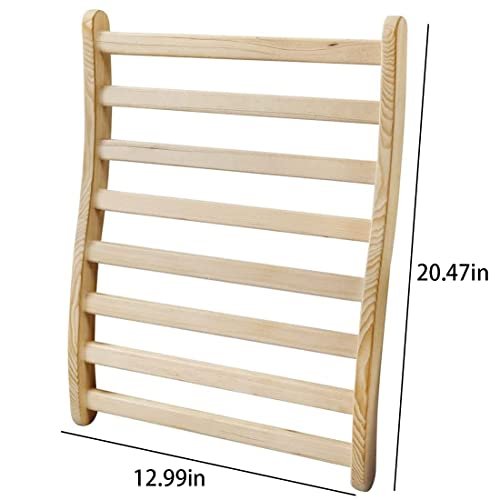
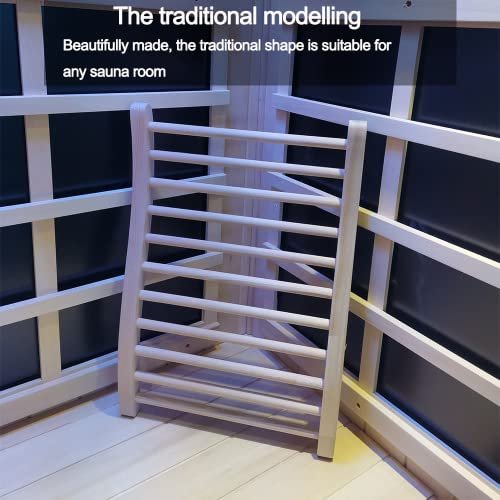
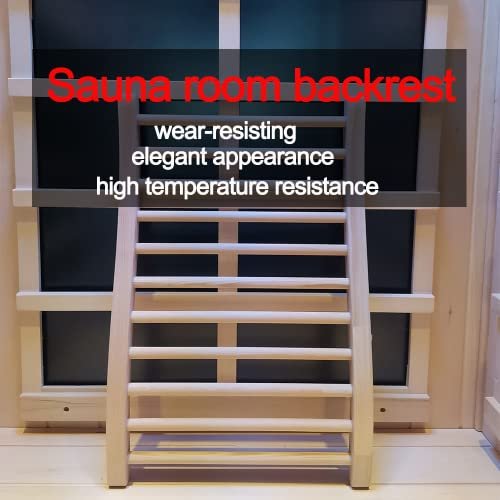
Canadian hemlock backrest in the smaller size — 20.47" × 12.99" × 2" — with an S-curve design that follows the natural arch of the lower back rather than forcing a 90° sit. Hollow mesh construction adds a light massage effect during use. The primary practical function in an infrared sauna: keeps your back off the heater panels. No assembly; 300 lb load capacity. Rated 4.7★ across 62 reviews.

Works in any sauna type — infrared, barrel, or traditional — and ships ready to use; the S-curve geometry is the differentiator over flat backrests that just prop you upright without lumbar support.

See on Amazon
LTCCDSS 1PCS Sauna Backrest Canadian Hemlock | S-Shape Design - Slip-Resistant - Non-Toxic - Comfortable - Sauna Accessories Kit Apply to Barrel or Infrared Sauna (23.98 in * 15.54in)

Hemlock Backrest (Large, 24")

The larger hemlock backrest at 23.98" × 15.54" × 2" — same S-curve design as the smaller model but with more surface coverage for taller users or anyone who wants fuller back support across the shoulders. Quebec hemlock rated to withstand temperatures above 200°F, slip-resistant, no assembly, 300 lb capacity. The highest-rated product in the LTCCDSS line at 4.9★ across 24 reviews.

The highest-rated item in the entire LTCCDSS catalog — the larger size makes a meaningful difference for users above 5'10" who find the smaller backrest doesn't reach their shoulder blades.

See on Amazon

How LTCCDSS Models Compare Side by Side

Three product groups, one table each. Run your primary constraint first — capacity for outdoor units, door style for indoor, footprint for covers — then use the specs to eliminate rather than select. Most buyers narrow to one or two candidates this way before reading the full product cards.

LTCCDSS Outdoor Far Infrared Sauna Comparison

Feature Fir Wood 2-Person Outdoor Sauna Fir Full Spectrum 3-Person Outdoor Mahogany Ultra-Low EMF 2-Person Outdoor Red Cedar Ultra-Low EMF 4-Person Outdoor
Wood SpeciesQuebec soft firQuebec soft firWest African mahoganyBC red cedar
Outdoor Temp Floor-5°F-5°F-10°F-10°F
Carbon Crystal Panels610912
Power1,750W1,950WNot specified2,050W
Circuit Required120V / 20A120V / 20A120V / 20A120V / 25A
EMF RangeStandard low EMFStandard low EMF≤0.5 mG average0.1–1.5 mG average
Full Spectrum (NIR+MIR+FIR)NoYesNoNo
External Dimensions (L×W×H)57.9"×40.5"×81.1"83"×45"×82"46.5"×36.2"×81.1"68.2"×52.4"×82.7"

The fir 2-person is the entry point for mild-winter climates — standard outlet, smallest footprint, lowest barrier to purchase. Step up to the fir 3-person if you need all three infrared bands (NIR + MIR + FIR) and can accept the -5°F temperature floor. If your winters drop below -5°F regularly, the mahogany 2-person or red cedar 4-person are the only two models in this group rated for that exposure — and the red cedar's 12 panels and hemlock anti-scald partition make it the clear flagship for serious outdoor use.

LTCCDSS Indoor Far Infrared Sauna Comparison

Feature Hemlock 1-Person Indoor Sauna Hemlock 1-Person Indoor 3-Glass Hemlock 1-Person Indoor 2-Glass Ceramic 2-Person Indoor Sauna
Capacity1 person1 person1 person2 persons
Power1,050W1,100W1,060W1,760W
Heater Panels6 carbon crystal6 carbon crystal6 carbon crystal6 panels + 2 ceramic cubes
EMF Range3–10 mG3–10 mGNot specifiedNot specified
ChromotherapyNone2× 7-color lights1× color + 1× red lampYes
Glass Door DesignStandard single3-sided 270° panoramic2-tempered-glassStandard
Preheat Time~20–30 min~20–30 min~20–30 min~10 min
External Dimensions37"×28.6"×62.5"36.42"×32.32"×66.54"36.42"×28.54"×62.64"44"×36.2"×71.7"

For solo indoor use, the differentiator is almost entirely about the glass door and chromotherapy rather than heater performance — all three hemlock 1-person models run 6 panels on standard 120V and reach the same maximum temperature. The standard unit is the call if you want the smallest footprint and have no interest in chromotherapy; the panoramic 3-glass is for buyers who feel confined in a solid-wall cabin. Jump to the ceramic 2-person if you're buying for two adults or you simply won't wait 20+ minutes for preheat — the dual ceramic cubes cut that to roughly 10 minutes.

LTCCDSS Sauna Protective Cover Comparison

Feature Outdoor Sauna Cover (1-Person) Outdoor Sauna Cover (2-Person) Outdoor Sauna Cover (4-Person) Outdoor Sauna Cover (5-Person)
Maximum Sauna Fit (L×W×H)45.7"×39.4"×79.5"57.8"×40.5"×81.1"68.1"×52.4"×82.7"81.1"×60.6"×83.5"
Material3-layer Oxford cloth3-layer Oxford cloth3-layer Oxford cloth3-layer Oxford cloth
Door StyleHook-and-loop roll-upHook-and-loop roll-upHook-and-loop roll-upHook-and-loop roll-up
Roof CompatibilityHillside (gambrel) onlyHillside (gambrel) onlyHillside (gambrel) onlyHillside (gambrel) only
Fits Non-LTCCDSS UnitsYes, if within max dimsYes, if within max dimsYes, if within max dimsYes, if within max dims
Returns for Fit IssuesNot acceptedNot acceptedNot acceptedNot accepted

All four covers share the same material and construction — the only decision is matching the cover to your sauna's actual dimensions. LTCCDSS outdoor sauna owners can order directly using capacity as the guide: the 1-person mahogany unit (45.7"×39.37"×79.53") takes the 1-person cover; both 4-person outdoor models (68.2"×52.4"×82.7") take the 4-person cover. If you own a different brand, measure length, width, and height against the maximum fit dimensions before ordering — there are no returns for incompatibility.

Also in the LTCCDSS lineup: Sauna Accessories.

Which LTCCDSS Sauna Fits Your Situation

The right LTCCDSS model depends on three things your climate zone, your headcount, and whether EMF output is a priority purchase criterion. Run through the scenarios below in order — climate first, capacity second, EMF tier last — and you'll land on a short list of one or two models before looking at a single spec sheet.

LTCCDSS Sauna Backrest

Mild Winters, 1 to 2 Users, Standard EMF

If your outdoor temperatures rarely drop below -5°F and you're buying for one or two people, the fir 2-person outdoor unit (B0BJ2JZNB6) is the most straightforward entry point. It runs on a standard 120V/20A outlet — no electrician, no panel upgrade — and the gambrel roof handles the rain and snow your climate does get. Quebec soft fir is lighter than cedar or mahogany and costs less, which is the whole point of this tier. The basswood 2-person (B0CYGJRL5X) is worth the step up if you want 12 panels instead of 6 and don't mind the same -5°F ceiling.

Harsh Winters, 1 to 2 Users, EMF Is a Priority

This is the mahogany 1-person (B0DPFW1N2H) or mahogany 2-person (B0CWD8JHP5) scenario. West African mahogany handles -10°F, its water resistance beats oak in sustained outdoor exposure, and the ultra-low EMF spec — averaging ≤0.5 mG — is the highest EMF shielding available in the compact footprint tier. The 1-person makes sense if you're a solo user who genuinely won't share it; the 2-person gives you flexibility without a dramatic footprint increase.

2025 Launch, Best EMF Numbers, 2-Person

The carbonized composite 2-person (B0FCRLY7N5) is LTCCDSS's newest material — a carbonized wood-and-food-grade-plastic composite that doesn't require painting, resists mold and insects, and is rated for 10+ years of outdoor service life. Its ≤0.8 mG peak and ≤0.5 mG average represent the best EMF shielding published for any model in the line, with 95%+ ELF/EMF blocking. Ships in 2–3 weeks. If you're undecided between mahogany and composite at the 2-person scale, the composite is the more forward-looking choice; mahogany wins if natural wood construction matters to you.

Mild to Moderate Winters, 3 Users, Want Full Spectrum

The fir full-spectrum 3-person (B0F4CMWZX7) covers this. Ten panels at 1,950W across near, mid, and far infrared — all three bands in a standard-outlet unit with a -5°F outdoor floor. It ships in 5–6 days, which is faster than most competitors in this size class. If you want a wider interior — 55.7" × 44.9" versus the fir 3-person's 67.5" × 37.6" — the basswood full-spectrum 3-person (B0FHH5TTX9) has more usable elbow room but ships in 4–5 weeks.

Harsh Winters, 3 Users, Want Everything

The composite ultra-low EMF 3-person full-spectrum unit (B0FCRPDDDR) has the highest feature density of any 3-person model in the line: 12 panels, 1,950W, full spectrum across all three IR bands, and ultra-low EMF averaging 0–1 mG, all in carbonized composite that won't require re-staining every spring. It ships in 4–5 weeks. This is the model to choose if you're willing to wait and don't want to make any compromises.

Largest Capacity, Want the Flagship

The red cedar 4-person (B0DDQ154G5) is the answer here, and honestly, it's not a close call. BC red cedar's low-density, high-porous structure retains heat better than denser materials, it handles -10°F outdoor exposure, and the hemlock anti-scald partition is a safety feature that matters in a cabin with four adults moving around near 12 active heater panels. The 10-year seller warranty on this model is the longest in the line. It needs a 25-amp circuit — check your breaker panel before ordering.

Indoor Use Only, Solo User

Three hemlock 1-person indoor models are differentiated mainly by door style, not performance. Standard unit (B0DWSKVT2J): smallest footprint at 37" × 28.6", no chromotherapy, the right choice for a utility-focused buyer. The 2-glass door model (B0DN62SZ29) adds a red lamp and one chromotherapy light without meaningfully changing the footprint. The 3-glass panoramic (B0DNFQVRR8) is for buyers who genuinely feel claustrophobic in enclosed saunas — the 270° glass design is the main reason to pay more. If EMF is your indoor priority, the ultra-low EMF 8-panel unit (B0DWSDXGZZ) is in a different tier entirely: 0–1 mG, 8 panels, and the most extensive lighting configuration in the indoor line.

Indoor Use, Two People, Fast Preheat Matters

The ceramic 2-person (B0F43RNX1B) is built for this. Two ceramic heating cubes alongside 6 carbon crystal panels drive preheat to roughly 10 minutes — versus 20–30 minutes for panel-only builds. Dual LCD control panels, interior and exterior, so neither person has to reach outside the cabin to adjust temperature. If the 10-minute preheat time is the one spec that would change your daily behavior and get you using it more consistently, this is the right model.

Wood Species Guide for Your Climate

LTCCDSS Sauna Backrest

Wood species determines what climate your outdoor sauna can realistically handle. It's not a cosmetic choice — the structural properties of the material affect thermal insulation, moisture resistance, and how long the cabin holds up through repeated freeze-thaw cycles. Here's what each species in the LTCCDSS line actually does and who it's for.

Quebec Soft Fir — The Entry-Level Outdoor Material

Sourced from Quebec, Canada. Soft fir is lightweight, moderately strong, and has a light natural fragrance. It handles outdoor temperatures down to -5°F. The wood is used throughout the structural frame — roof trusses, wall panels — where its weight advantage simplifies assembly and where a heavier hardwood would be overkill.

Fir is the right material if you're in a climate zone that doesn't regularly see sustained temperatures below -5°F. That covers most of the Southeast, the Southwest, the Pacific Coast, and the mid-Atlantic states. For buyers in Chicago or Minneapolis, it's not the right call — those winters will push below fir's floor regularly. But for someone in Atlanta or Phoenix buying their first outdoor unit, fir gets you in the sauna for the lowest entry investment with real wood construction.

Maintenance note: outdoor fir benefits from a wood wax oil treatment every 6 months, per the product manual. That's not a burden — it's 20 minutes twice a year — but skip it consistently over several seasons and you'll see weathering at the joints before you'd see it on cedar or mahogany.

Wisconsin Basswood — US-Sourced, Moderate Climate

Sourced from Wisconsin. Basswood has moderate hardness, air-dry density of roughly 500–550 kg/m³, and a fine, uniform grain that finishes cleanly. It's corrosion-resistant, handles repeated temperature cycling without cracking, and has strong toughness relative to its weight. The outdoor temperature floor is -5°F on the 2-person model.

The practical advantage of basswood over fir is panel count. The basswood 2-person carries 12 carbon crystal heating panels at the same 1,750W as the fir entry model — double the coverage area, which means more even heat distribution across the cabin and faster recovery when the door is opened and cold air enters. For buyers who want US-sourced wood and better panel coverage without stepping up to mahogany pricing, basswood is the right middle step.

One practical care note from the product manual: basswood furniture can fade, so periodic waxing with a neutral detergent and professional wood wax is recommended — roughly 5–6 times annually. Keep the exterior away from sustained direct heat exposure and direct lamp heat, and inspect the mortise-and-tenon joints seasonally. This is standard outdoor wood maintenance rather than anything unusual about basswood specifically.

West African Mahogany — Water Resistance Leader

Sourced from the coast of West Africa — Nigeria and Ghana. Mahogany's defining property here is water resistance that exceeds oak and most comparable hardwoods, combined with minimal splintering and high stain resistance. The outdoor temperature floor is -10°F. It has a light, pleasant scent and strong dimensional stability through temperature swings.

Mahogany is the right material for buyers in climates with both harsh winters and high humidity or frequent rain — the Pacific Northwest, the Great Lakes region, or anywhere that sees sustained wet weather alongside cold. The water resistance advantage over oak isn't minor: mahogany's cell structure repels surface moisture more effectively, which matters for an outdoor structure that may sit under a cover through an entire wet winter.

The ultra-low EMF tier is exclusively available in mahogany and composite material in the current LTCCDSS line — so buyers who want the ≤0.5 mG average spec and prefer natural wood over composite are specifically looking at the mahogany models. That's a meaningful constraint worth knowing before you start comparing models.

BC Red Cedar — Best Thermal Insulation in the Line

Sourced from British Columbia, Canada. Red cedar's low-density, high-porous cell structure creates natural air pockets that trap heat — the same physical mechanism behind why cedar has been used in traditional Nordic saunas for centuries. LTCCDSS describes this directly: the thermal insulation effect of BC red cedar "far exceeds that of bricks, cement and steel." Outdoor temperature floor is -10°F. Natural resistance to moisture, insects, and decay.

For buyers in genuinely harsh climates — sustained winters below 0°F, heavy snow load, high moisture year-round — red cedar is the correct outdoor sauna material. The thermal insulation advantage over fir or basswood isn't marketing language; it's a function of wood density. A red cedar cabin holds interior temperature better when the ambient outdoor temperature is extreme, which means less energy consumed maintaining session temperature and faster recovery between uses.

Red cedar also ages differently from other woods. The natural oils in the wood maintain its color and structural integrity over years of outdoor exposure without the same level of intervention required by fir or basswood. Apply outdoor wood wax oil every 6 months per the manual — but cedar's natural resistance means visible weathering happens more slowly than with lighter woods. For a permanent outdoor installation that you want to hold up for a decade without significant rehabilitation, red cedar is the right call.

Carbonized Wood-Plastic Composite — The Low-Maintenance Option

This is LTCCDSS's 2025 material — a carbonized natural wood combined with food-grade plastic in a composite that carries real structural advantages over natural wood in outdoor use. The carbonized layer actively resists mold, insects, and moisture rather than just tolerating them. The material won't warp or crack in high-temperature, high-humidity environments. No painting or staining is ever required. Rated for 10+ years of service life with proper use.

The practical appeal is low maintenance. Natural wood saunas benefit from periodic wax oil treatment, especially in climates with significant seasonal weather variation. The composite eliminates that requirement — cleaning with a damp cloth is sufficient. It also handles heat evenly because the composite structure has good thermal conductivity and retention.

The composite units carry LTCCDSS's best-published EMF spec: ≤0.8 mG peak and ≤0.5 mG average on the 2-person model, with 95%+ ELF/EMF shielding. The combination of zero maintenance requirements, industry-leading EMF numbers, and proven resistance to the elements makes composite the right choice for a buyer who wants to install it, cover it when not in use, and forget about seasonal upkeep. The trade-off is that it doesn't have the natural wood grain aesthetic of cedar or mahogany — the composite has natural texture but it reads differently in person. If the visual and tactile character of real wood matters to you, composite isn't the right call.


EMF in Infrared Saunas — What the Numbers Mean

EMF stands for electromagnetic field radiation — the low-frequency electric and magnetic fields emitted by any powered electrical device. In an infrared sauna, the heater wiring is the primary source. The unit of measurement is the milligauss (mG). Lower numbers mean less field exposure during your session. Here's how to read those numbers across different products and what the thresholds actually mean.

EMF vs. ELF — Two Measurements, One Concern

These two terms appear together on LTCCDSS product listings, and buyers are sometimes confused about the distinction. EMF (electromagnetic field) in the context of sauna ratings refers to magnetic field radiation, measured in milligauss. ELF (extremely low frequency) refers specifically to the lower-frequency band of that radiation — roughly 1 to 300 Hz — which is the range most associated with household electrical appliances.

In practical terms: a sauna's heater panels emit both EMF and ELF simultaneously. A product that claims "low EMF" shielding without specifying whether it addresses ELF as well is only partially solving the problem. LTCCDSS's ultra-low EMF line specifically addresses both — the internal tube shielding inside the heater panels is designed to block 90%+ of both ELF and EMF on the standard outdoor line, and 95%+ on the 2025 ultra-low composite and mahogany models.

What the Milligauss Numbers Actually Mean

The International Commission on Non-Ionizing Radiation Protection (ICNIRP) sets the international reference level for general public exposure to magnetic fields at 2,000 mG for 50 Hz frequencies — a figure so high that no home sauna comes anywhere close to it. The more relevant reference points are the ones researchers and wellness practitioners actually debate.

LTCCDSS Sauna Backrest

For context: a standard electric blanket emits approximately 20–100 mG. A hairdryer at arm's length emits 1–70 mG. A laptop on your lap measures roughly 1–30 mG depending on model. These are rough figures, but they give you a reference class.

LTCCDSS's standard outdoor line averages 0–1.5 mG with internal tube shielding blocking 90%+ of ELF/EMF. That places standard LTCCDSS outdoor models well below the emissions of common household appliances — which is what "low EMF" actually means in practice, rather than against ICNIRP's public safety threshold.

The 2025 ultra-low EMF line — the composite and mahogany models — goes further: ≤0.8 mG peak and ≤0.5 mG average, with 95%+ shielding. These are the most specific EMF numbers LTCCDSS publishes, and they're verifiable: any buyer can purchase a personal gaussmeter (basic models run under $30) and take readings inside the cabin after delivery. LTCCDSS doesn't ask you to trust the spec — the numbers are specific enough to test.

Why Carbon Crystal Panel Design Matters for EMF

The heater panel technology affects EMF output as much as the shielding does. Older ceramic rod heaters produce more localized, intense electromagnetic fields because the heating element is concentrated in a narrow rod. Carbon crystal panels distribute the heating element across a large flat surface — which means lower field intensity per unit area at the same energy output.

LTCCDSS uses carbon crystal far-infrared panels across the outdoor line. The internal tube shielding that LTCCDSS references in product listings is a secondary layer inside the heater panel construction itself — it's not a wrap added around the exterior of an otherwise standard panel, but a shielding mechanism built into the heater assembly. That's the structural reason the ultra-low models achieve ≤0.5 mG average rather than just low single-digit mG.

Which LTCCDSS Tier Is Right for Your EMF Concern Level

The honest answer is that the standard outdoor line (0–1.5 mG) is already well within a range that most buyers would consider low, based on comparison to common household appliances. If your EMF concern is moderate — you want it lower than a laptop, lower than an electric blanket — the standard line satisfies that.

If you've done enough reading to have a specific mG target in mind, or if you own a gaussmeter and plan to verify after delivery, the ultra-low EMF mahogany and composite models (≤0.5 mG average) are the appropriate tier. For the indoor line, the standard hemlock models measure 3–10 mG — higher than the outdoor units — because the panels are in closer proximity to the occupant in a smaller enclosed space. The ultra-low EMF indoor model (B0DWSDXGZZ) measures 0–1 mG and addresses that gap.

Real-World Performance and Assembly Expectations

Spec sheets describe maximum temperatures and panel counts. What buyers actually want to know is how long it takes before the session feels ready, what the heat is like to sit in, and whether two people can put an outdoor unit together over a weekend without losing their minds. Here's the honest version.

Warm-Up Times by Model Tier

Marketing claims for infrared saunas consistently say things like "10-minute warm-up" — which is technically achievable but rarely the whole story. Ten minutes gets the panels hot; it doesn't mean the cabin air has reached session temperature.

  • Standard 6-panel outdoor units (fir 2-person, basswood 2-person): plan for 15–25 minutes from a cold start before the session feels genuinely warm at 120–130°F, longer if the unit has been sitting outside in 20°F air.
  • 12-panel units (basswood 4-person, red cedar 4-person): the higher panel count does produce faster warm-up — the 10-minute claim on the basswood 4-person is more realistic for these models at moderate ambient temperatures, though maximum session temperature (149°F) takes longer to reach.
  • Ceramic cube indoor models (ceramic 1-person and 2-person): the 10-minute preheat claim is the most credible in the entire lineup because ceramic cubes produce a higher-intensity, more localized heat burst at startup. In practice, buyers report this being the single feature that changes daily usage — they actually use it every day rather than skipping because setup feels too slow.
  • Starting in cold outdoor air (-10°F to 0°F): add 10–15 minutes to any warm-up estimate. The fitted protective cover mitigates this by keeping the cabin insulated between sessions — a sauna that's been sitting under a cover in cold air warms noticeably faster than one that's been fully exposed overnight.

What a Session at 130°F vs. 149°F Actually Feels Like

Infrared sauna air temperature is lower than traditional steam or Finnish sauna air temperature, and buyers who arrive expecting the same sensation are often initially surprised. At 130°F in an infrared cabin, the air is warm and breathable — you're not fighting to inhale the way you might in a 190°F steam room. The heat you're feeling is primarily radiant from the panels, not convected from the air. Your skin warms first, then deeper tissue, over the course of 20–30 minutes.

At 149°F — the maximum temperature on most LTCCDSS models — the session is noticeably more intense. Most users don't actually run sessions at maximum; 130–140°F is a more common working range once they've calibrated their preference. Sessions at maximum temperature are shorter, typically 15–20 minutes. At 130°F, 30–40 minutes is a normal session length for regular users.

One thing most first-time infrared buyers don't expect: the bench, walls, and door are not hot to the touch the way a traditional sauna is. The heat is in the panels and in the air, but you can touch the hemlock benches comfortably. That's actually the point — the hemlock backrest and anti-scald partition on the red cedar 4-person aren't just safety features for cautious users; they're addressing a real behavior pattern where people lean back against surfaces without thinking about it.

Assembly — What to Actually Expect

The marketing claim of "30-minute assembly" appears across the indoor models. For the outdoor units, no specific assembly time is listed. Here's a realistic breakdown based on buyer reports and the construction of the units.

Indoor 1-person hemlock units (B0DWSKVT2J, B0DN62SZ29, B0DNFQVRR8): the tongue-and-groove panel design genuinely does simplify indoor assembly. Two people can assemble these units in 30–60 minutes. One person can do it, but it's awkward — the panels are light but the coordination of holding one panel while connecting another is easier with a second set of hands. The most common assembly friction point across all indoor models is routing the wiring through the panel connections without pinching — it's covered in the manual, and support responds within 12 hours on weekdays if anything is unclear.

Outdoor units (2-person through 4-person): these are larger structures with more components. A realistic assembly estimate for two reasonably handy adults is 2–4 hours for a 2-person outdoor unit on a flat surface, and 3–5 hours for the 4-person models. Buyers who have built garden sheds or assembled flat-pack furniture at scale will find this straightforward. Buyers with no construction experience may want to review the assembly instructions before the delivery arrives rather than opening the boxes cold.

One practical note: all outdoor units require a flat, level surface. Concrete, pavers, or a deck works. Gravel or uneven ground introduces problems at the door frame and floor panel connections that no amount of careful assembly will solve. Sort out the surface before the unit arrives.

Control Board Failures — Honest Context

The most common negative theme in LTCCDSS reviews — and in the wider mid-market infrared sauna category — is control board electronics. One Amazon reviewer noted a board failure after 3 months on an indoor unit. This is real, and it shouldn't be dismissed.

What matters is the support structure around it. The 10-year seller warranty on flagship outdoor models covers this. The 12-hour weekday response time means a support ticket gets acknowledged and diagnosed quickly. The four US warehouse locations (California, Texas, New Jersey, Georgia) mean replacement parts ship domestically rather than arriving six weeks later from overseas. A control board failure on a $400 blender is a replacement purchase. A control board failure on a warranted sauna with responsive US-based support is an inconvenience with a known resolution path.

The indoor basic models carry a 1-year parts warranty — shorter than the outdoor flagship tier. If you're buying an indoor unit and long-term parts support is a priority, the ceramic and ultra-low EMF indoor models carry longer warranty coverage (2-year full / 5-year core parts on some configurations). Check the specific warranty terms when ordering and save the warranty card communication instructions that come with the unit.

Warranty, Support, and Parts Availability

LTCCDSS's warranty structure varies meaningfully across product tiers — the 10-year seller warranty on outdoor flagship models is a different commitment than the 1-year parts coverage on entry indoor units, and buyers should know which tier they're purchasing before committing. Here's how it breaks down.

Warranty Coverage by Product Tier

The outdoor flagship models — particularly the red cedar 4-person ultra-low EMF unit (B0DDQ154G5) — carry the longest explicitly documented warranty in the line: 10-year seller warranty on the product itself. For the broader outdoor lineup and many indoor units, the structure is:

  • 2-year full warranty: free replacement of parts due to quality issues within the first two years
  • 5-year core parts warranty: covers the central circuit, carbon crystal panels, and ceramic heaters (where applicable) through year five
  • Exclusions: damage from modifications, natural disasters, accidents, or intentional acts is excluded across all tiers

The entry indoor hemlock models (B0DWSKVT2J, B0DN62SZ29) show a 1-year free parts warranty in their listing copy, with long-term paid replacement support offered after the warranty period. If long-term coverage matters to you on an indoor purchase, the ceramic models and ultra-low EMF indoor unit carry the more robust 2-year/5-year structure and are worth the step up for that reason alone.

How to Initiate a Warranty Claim

LTCCDSS's support operates through Amazon's buyer-seller messaging system. The most direct path to a warranty claim or support question is through your Amazon order — use the "Contact Seller" button associated with your order, describe the issue, and include your order number and any photos of the problem component. The documented response commitment is 12 hours on weekdays.

One step that multiple buyers miss: the warranty card is activated by contacting the seller after ordering, not automatically. The listing copy on several models specifically instructs buyers to contact the seller right after ordering to register warranty coverage. Do this before you need it — a five-minute message after your order confirms is easier than trying to establish a warranty relationship for the first time during a claim.

Parts Availability and US Warehouse Logistics

Four US fulfillment locations — California, Texas, New Jersey, and Georgia — handle parts shipping. This matters for a product in this size and price class. The most common failure point across the mid-market infrared sauna category is control board electronics, and a US-based parts network means replacement components ship in days, not weeks. Overseas parts sourcing for a 300 lb sauna that takes 3 hours to assemble is a materially worse outcome than the same failure handled domestically.

Buyers who live in the Northeast or Southeast have the shortest logistics distance from NJ and GA respectively; West Coast and Texas buyers are covered by the CA and TX locations. This four-warehouse structure isn't unique to LTCCDSS, but it's worth knowing explicitly when comparing brands that list no US inventory presence.

The Honest Limitation

There is no US phone support line. All support runs through Amazon messaging. For buyers who strongly prefer phone communication for troubleshooting — particularly for assembly issues on outdoor units where you're holding pieces in place and can't easily type — this is a real constraint. The 12-hour response time means you could be waiting on an answer longer than you'd like during an active assembly session. The workaround: download and review the assembly instructions before the unit arrives, and have your order number ready to message immediately if something is unclear during the build.

LTCCDSS Saunas for Athletic Recovery

Far infrared saunas are increasingly used as a post-training recovery tool — not a replacement for cool-down protocols, but a deliberate heat stimulus that triggers physiological responses relevant to muscle repair, inflammation management, and sleep quality. Here's what the infrared environment specifically offers athletes, which LTCCDSS models fit solo athlete use cases, and what to realistically expect from regular session use.

Why Infrared Works Differently for Recovery Than Traditional Sauna

Traditional Finnish and steam saunas heat the air to 170–210°F, forcing the body to manage extreme ambient temperature. Infrared saunas heat the body directly at lower air temperatures — typically 120–149°F in LTCCDSS models — which means the cardiovascular demand of the session is lower and the radiant heat penetrates tissue more directly without the same respiratory challenge.

For athletes with heavy training loads, this distinction matters. Post-workout, when the respiratory system is already taxed, a 140°F far infrared session at breathable air temperature is easier to sustain for a full 20–30 minutes than a 190°F steam session. The far infrared wavelengths — roughly 5.6 to 1,000 microns — penetrate to muscle and connective tissue depth, which is where the relevant post-training recovery stimulus happens. That's the mechanism, and it's why this category has traction in endurance and strength communities.

Session Timing and Frequency

The prevailing guidance in endurance sport communities (visible in threads on r/Ultramarathon and similar) is to schedule infrared sessions post-training rather than pre-training. Using heat before a hard session has a meaningful cardiovascular pre-load that most athletes don't want. Post-session, approximately 30–60 minutes after a hard workout has ended, a 20–30 minute infrared session can support muscle relaxation and blood flow without the systemic stress of a pre-training heat load.

Frequency: most athletes who use home saunas for recovery report 4–6 sessions per week during high training volume periods, often daily during recovery weeks. The advantage of a home unit — specifically the solo 1-person indoor or 1-person outdoor models — is that access friction disappears. A $60 spa session and a 45-minute round trip happens maybe twice a week. A home unit in the basement or backyard happens daily because the barrier is a walk rather than a commitment.

Which Models Fit the Solo Athlete Profile

For indoor installation — where most athletes will place a recovery sauna given space and convenience considerations — the ultra-low EMF 1-person indoor unit (B0DWSDXGZZ) is the most appropriate choice. Eight heater panels at 1,460W, 0–1 mG EMF, and a 35" × 36" × 74" footprint that fits a dedicated corner of a home gym or basement. The standard 15A plug means no circuit upgrade. Three chromotherapy lamps and two reading lamps are included — the latter matters for longer sessions where athletes might otherwise leave because they're bored.

For outdoor installation — which athletes with backyard access often prefer because it creates a more deliberate recovery ritual separate from the training space — the mahogany 1-person outdoor unit (B0DPFW1N2H) covers the solo athlete use case with ultra-low EMF spec and a -10°F outdoor temperature floor. If training continues through northern winters, that temperature floor matters: -5°F fir models are fine for most US climates, but athletes in genuinely cold regions (northern Minnesota, upstate New York, mountain West) who train year-round will benefit from the mahogany's extended cold tolerance.

Electricity Cost Per Session

This comes up often in athletic recovery contexts because session frequency is high. The 1,050W standard indoor unit running a 30-minute session consumes 0.525 kWh. At the US average residential electricity rate of approximately $0.16/kWh, that's roughly $0.08 per session — under $0.10 per recovery session. The 1,460W ultra-low EMF indoor unit at 30 minutes consumes 0.73 kWh, approximately $0.12 per session. At 5 sessions per week, that's under $0.60/week in electricity for a daily recovery tool. The math is trivially favorable compared to the cost of a single gym day pass.

What Not to Expect

Infrared sauna use does not replace sleep, nutrition, or structured deload periods in a recovery protocol. The research on sauna and cortisol — which is a real question in the athletic community, and one that surfaces in Google PAA data — is mixed: some studies show cortisol reduction with regular heat exposure; others show acute cortisol elevation immediately post-session that normalizes within an hour. For athletes already managing high training load stress, a 30-minute infrared session is a net positive for most people, but it's not a shortcut around the fundamentals. The value is in daily access and consistency, not in any single session's effect.

Watch a Real 2-Person EMF Test Before You Buy

We picked this review because RBL Reviews put the 2-person outdoor model through a genuine walkthrough — not a sponsored unboxing, but an honest look at how the unit performs for a home wellness setup. You'll see the low-EMF claims evaluated against what the sauna actually delivers at session temperature. If you've been comparing this model against higher-priced brands and wondering where the real differences are, this video answers that question directly. Check current pricing on Amazon after watching — the gap may be smaller than you expect.

What Buyers Say After Living With LTCCDSS

"Set this up in our backyard in early November — two of us assembled the 2-person fir unit in about 3 hours on a Saturday. The gambrel roof handled the first snowfall exactly as advertised. The Bluetooth connection was instant and the chromotherapy light is something we actually use, not just a gimmick. Minor gripe: the instructions could be clearer on the wiring step. Otherwise exactly what we needed at this price point."
— Derek M., Homeowner, Pacific Northwest
"I've been tracking my EMF exposure for two years — I have a gaussmeter and I test everything. The mahogany 2-person outdoor unit measured 0.4 mG average at my seated position during a full session, which matches the spec. That's lower than my laptop and lower than any other sauna I've tested. The wood quality and the -10°F rating were both important for my Minnesota winters. This is a serious product for a serious price point."
— Nora T., Wellness Researcher, Minneapolis
"Bought the ceramic 1-person indoor unit for my home gym corner. The 10-minute preheat is real — I use it after every lifting session, which I never would have done if I had to wait 30 minutes. The footprint is small enough that it doesn't eat the room. One thing: the single chromotherapy lamp is a nice addition, but I'd want the reading lamp brighter for longer sessions. Overall, exactly what I needed for daily recovery use."
— James R., Strength Coach, Austin
"We looked at Clearlight and Sun Home first and couldn't justify the price difference for what we actually needed — an outdoor 4-person cabin that holds up through real winters. The red cedar unit has been outside through two seasons now, no issues. The hemlock partition keeping you off the heater panels is a feature I didn't know I wanted until my kid almost leaned into the panel on day one. Assembly took us about 4 hours with two adults. The 10-year warranty was the deciding factor."
— Renee S., Homeowner and Mother of Three, Ohio
"Got the 3-glass panoramic indoor model because I genuinely feel claustrophobic in enclosed spaces. The 270° glass design solved that completely — it feels open enough that I actually stay in for the full 30 minutes instead of bailing at 15. The dual chromotherapy lights are more useful than I expected for winding down after work. Took about 45 minutes to assemble solo, which was a little awkward on the larger panels but doable."
— Maya P., Freelance Designer, Seattle
"Bought the large hemlock backrest separately after already having a different brand's sauna. The S-curve is a real difference from the flat backrests I'd been using — my lower back doesn't ache after a long session anymore. Took two minutes to put in place, no tools. The hemlock holds up at sauna temperatures without any issue. Only thing I'd say is the wood grain varies noticeably between units, so don't expect yours to look exactly like the listing photo."
— Carlos W., Trail Runner and Sauna Enthusiast, Denver

Common Questions About LTCCDSS Far Infrared Saunas

What is the downside to an infrared sauna?

The main limitations are lower maximum air temperature than traditional Finnish saunas (infrared cabins typically reach 120–149°F versus 170–200°F in traditional saunas), limited social capacity in smaller models, and the need for a dedicated electrical circuit on higher-wattage outdoor units. LTCCDSS's 2,050W 4-person models require a 25-amp circuit — check your panel before ordering. The heat experience is effective but genuinely different from a steam sauna, which some buyers don't prefer.

What is better, infrared or far infrared?

Far infrared (FIR) is a subset of infrared — specifically the longest-wavelength band, roughly 5.6 to 1,000 microns. Near infrared (NIR) penetrates the skin's outer surface and is associated with skin health; FIR penetrates deeper into muscles and connective tissue. Most LTCCDSS outdoor models are FIR-only. The full-spectrum models — including the Fir Full Spectrum 3-Person Outdoor (B0F4CMWZX7) — include NIR and MIR alongside FIR for all three wavelength bands in a single session.

Is it better to get a full spectrum sauna or far infrared?

Full spectrum adds near and mid infrared to the far infrared base — near IR targets skin surface circulation and skin health; mid IR reaches soft tissue; far IR penetrates to muscle and joint depth. If your goal is primarily muscle recovery and heat therapy, a FIR-only unit delivers the core benefit. Full spectrum is worth the upgrade if you specifically want the skin health and surface circulation effects of NIR alongside the deeper tissue response of FIR. LTCCDSS offers full-spectrum configurations in the fir 3-person and composite 3-person outdoor models.

Is there such a thing as an outdoor infrared sauna?

Yes. LTCCDSS's entire outdoor lineup — 10 models spanning 1-person through 4-person capacity — is specifically designed for year-round outdoor installation. All outdoor models use a gambrel (hillside) roof to drain rain and snow, IP6 waterproof coating on roof surfaces, and wood species rated for outdoor temperatures as low as -10°F on red cedar and mahogany models. They run on standard 120V household circuits on smaller models, with 25-amp circuits required for 2,050W 4-person units.

Is a low-EMF infrared sauna good?

Low EMF is a meaningful specification, not just a marketing phrase — but only when the claim includes actual measured values. LTCCDSS's standard outdoor line averages 0–1.5 mG with 90%+ ELF/EMF shielding. The ultra-low EMF 2025 line (composite and mahogany models) measures ≤0.8 mG peak and ≤0.5 mG average, with 95%+ shielding — well below the emission levels of common household appliances like laptops and electric blankets. These numbers are specific enough to verify with a personal gaussmeter after delivery.

Should an outdoor sauna be covered when not in use?

Yes — particularly through winter months and rainy seasons. A fitted cover keeps moisture out of the heater panel area, reduces heat loss between sessions (so the unit reaches temperature faster when you do use it), and protects the wood exterior from accelerated weathering. LTCCDSS makes model-specific fitted covers in 1-person through 5-person sizes — the Outdoor Sauna Cover (4-Person) (B0GXYW54RG) fits both 4-person outdoor models directly. Covers are cut for specific footprints and are not universal; verify dimensions before ordering for non-LTCCDSS units.

What accessories do you need for a sauna?

For an infrared sauna, the most functional accessories are a backrest and a fitted protective cover for outdoor units. The LTCCDSS Hemlock Backrest (Large, 24") (B0B8YY2N3V) keeps your back off the infrared heater panels — the hollow mesh S-curve design provides lumbar support and a light massage effect. Towels and a water bottle are the other essentials. Beyond that, the sauna's built-in chromotherapy, Bluetooth speakers, and reading lamps cover most of what buyers add externally on other brands.

What do 10 minutes in an infrared sauna do?

A 10-minute far infrared session at 130–140°F begins raising core body temperature, increases circulation, and starts the sweating response — but most of the session's benefit compounds between 15 and 30 minutes as the body temperature elevation peaks and sustains. Ten minutes is the warm-up phase rather than the full session for most users. That said, for recovery purposes after hard training, even a short session produces measurable cardiovascular and muscle-relaxation effects compared to no heat exposure at all.

Do sauna blankets give off EMF?

Yes — sauna blankets emit EMF because their heating mechanism uses wires that run through the blanket material. This is a meaningful distinction from a cabin-style far infrared sauna like LTCCDSS's outdoor and indoor units, where the heater panels are mounted at distance from the body rather than in direct contact with it. The ultra-low EMF LTCCDSS models average ≤0.5 mG from carbon crystal panels with internal tube shielding — a materially different emission profile from blanket-style products where the heating element is physically wrapped around the user.

Can mold grow in an infrared sauna?

Infrared saunas don't use steam, so humidity levels inside the cabin stay lower than in a traditional wet sauna — which substantially reduces mold risk. That said, any enclosed wood structure exposed to outdoor moisture or body sweat can develop surface mold if left uncleaned for extended periods. LTCCDSS's carbonized composite outdoor models have an active carbonized layer that resists mold and moisture by design. For natural wood models, wiping down the interior after sessions and keeping the unit covered when not in use are the two most effective prevention steps.

What is the best outdoor infrared sauna on the market?

LTCCDSS was named the "Best Infrared" pick in Rolling Stone's roundup of outdoor saunas (June 2024), and independent YouTube reviewers have called the outdoor hemlock line "durable and long-lasting" with a "beautiful natural look." The Red Cedar Ultra-Low EMF 4-Person Outdoor Sauna (B0DDQ154G5) represents LTCCDSS's strongest all-around outdoor unit — BC red cedar, 12 panels, 0.1–1.5 mG EMF average, hemlock anti-scald partition, and a 10-year seller warranty. For buyers who don't need 4-person capacity, the mahogany 2-person ultra-low EMF unit (B0CWD8JHP5) covers the most demanding climate and EMF requirements in a compact footprint.

How LTCCDSS Outdoor Saunas Actually Get Built

LTCCDSS operates as a factory-direct brand under a joint authorization with SAUNATEADLANE, manufactured through two facilities — Hainan Kang lance Biotech CO., LTD. and WUXI SAUNAPRO TECHNOLOGY CO., LTD. — with over 100 product configurations spanning five sizes, five materials, and ten heater setups. That factory-direct structure is the reason LTCCDSS can offer BC red cedar, West African mahogany, and Quebec soft fir at pricing that sits clearly below Clearlight and Sun Home while sourcing from the same timber regions those brands use. The products aren't a compromise on materials — they're a compression of the retail chain between the factory floor and your backyard.

The 2025 ultra-low EMF line — the carbonized composite models — represents the most significant engineering update LTCCDSS has released to date. The internal tube shielding inside each carbon crystal panel is built into the heater assembly itself, not applied as an afterthought, and the result is a measured ≤0.5 mG average that buyers can verify with a personal gaussmeter after delivery. That spec didn't happen by accident. It came from consistent feedback in the infrared sauna community that vague "low EMF" language meant nothing without a published number, and from buyers who arrived with meters and tested units in the field. LTCCDSS responded with a testable spec rather than a marketing phrase. That's the kind of product development that earns trust in a research-heavy category.

Honestly, there are trade-offs to acknowledge. There's no US phone support line — all warranty and support interaction runs through Amazon messaging, which means a 12-hour response window rather than immediate help. The entry indoor models carry a 1-year parts warranty that's shorter than what the ceramic and outdoor tiers offer. And assembly on 4-person outdoor units takes real time — plan a half-day with a second pair of hands, not a lunch break. What LTCCDSS delivers in exchange for those constraints is real wood sourced by climate-appropriate species, a 10-year seller warranty on the outdoor flagship, four US warehouse locations for parts, and EMF specs with actual numbers attached. For buyers who've done the research and know what they're comparing against, the value proposition is clear.

Useful Guides

Real questions about infrared saunas deserve real answers, not marketing copy.

About LTCCDSS

LTCCDSS is a factory-direct far infrared sauna brand operating under a joint authorization with SAUNATEADLANE, with manufacturing through Hainan Kang lance Biotech CO., LTD. and WUXI SAUNAPRO TECHNOLOGY CO., LTD. The brand specializes in outdoor and indoor far infrared saunas across five wood species and five capacity tiers, shipping from US warehouses in California, Texas, New Jersey, and Georgia. Their full catalog is available exclusively through the LTCCDSS Store on Amazon.

Customer Support

Support operates through Amazon's buyer-seller messaging system — use the "Contact Seller" button on your order page to reach the team. The documented response commitment is 12 hours on weekdays. For warranty activation, contact the seller directly after placing your order rather than waiting for a problem to arise; several LTCCDSS listings explicitly note that warranty registration requires that initial contact. If you have questions about specs, installation, or compatibility, the team provides one-on-one assistance through the same messaging channel.

Shipping and Warranty

LTCCDSS ships from four US warehouse locations — California, Texas, New Jersey, and Georgia — which means domestic parts shipping for a freight-scale product rather than overseas lead times. Outdoor flagship models carry a 10-year seller warranty; most outdoor and ceramic indoor models carry a 2-year full warranty plus a 5-year core parts warranty covering the central circuit, carbon crystal panels, and ceramic heaters. Entry indoor hemlock units carry a 1-year parts warranty. Check current availability and shipping timelines on the product listing at the time of purchase.